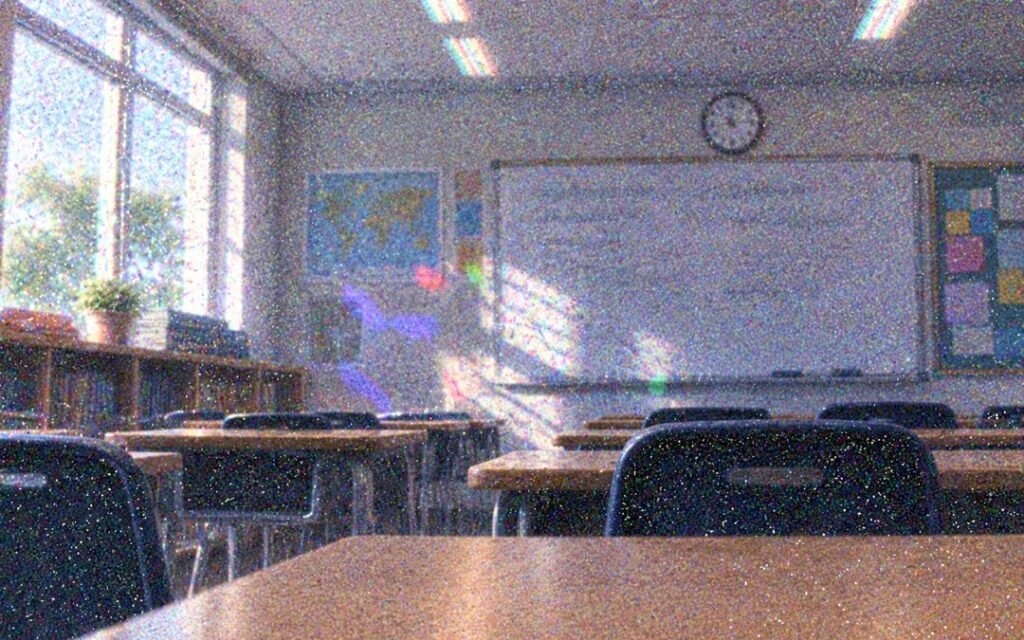
Have you ever felt like the lights in your classroom are just too bright?
Or maybe reading on a computer starts to make your eyes feel tired?
If you have Visual Snow Syndrome (VSS), you are not alone. Lots of kids with VSS find that certain things at school can be a little harder. The good news is that there are lots of simple ways teachers, parents, and schools can help!
Remember, every child with VSS is different. Some of these ideas might help you, while others might not, and that’s okay!
💡 Bright Lights
Some kids with VSS are bothered by bright lights or glare.
Here are a few things that might help:
- Sit somewhere with softer lighting.
- Close the blinds if sunlight is shining in your eyes.
- Wear medically approved tinted glasses if your doctor recommends them.
- Move away from bright windows or lights.
If bright lights bother you, don’t be afraid to tell your teacher. They want to help!
💻 Looking at Screens
Many schools use computers, tablets, and smart boards every day.
If screens make your symptoms feel worse, you could try:
- Turning the brightness down.
- Making the words bigger.
- Using dark mode if it feels more comfortable.
- Taking short breaks to rest your eyes.
- Using an anti-glare screen if one is available.
- Changing the background color
📚 Reading Can Be Tricky
Some kids with VSS say reading feels harder when their symptoms are bothering them.
Your teacher may be able to help by:
- Printing larger words.
- Giving you a digital copy that you can zoom in on.
- Letting you listen to an audiobook.
- Breaking big reading assignments into smaller parts.
- Giving you notes before class.
Remember, needing a different way to read doesn’t mean you’re less smart. Everyone learns differently!
🪑 Finding the Best Seat
Did you know where you sit in the classroom can matter?
Some kids like sitting:
- Away from bright windows.
- Away from shiny surfaces that reflect light.
- Closer to the board.
- Somewhere with fewer distractions.
It’s okay to ask your teacher if another seat would help you.
✏️ Tests and Homework
Sometimes VSS can make reading or looking at papers for a long time feel tiring.
Some kids find it helpful to have:
- A little extra time.
- Short breaks during long tests.
- A quieter room.
- Comfortable lighting.
- Homework split into smaller pieces.
Everyone deserves a chance to show what they know!
🌈 It’s Okay to Take a Break
Looking at books, screens, or bright lights for a long time can sometimes make your eyes feel tired.
Taking a short break can help.
You could:
- Look away from the screen for a minute.
- Stretch your body.
- Blink your eyes a few times.
- Take a few deep breaths.
- Look out a window (if bright light doesn’t bother you).
Even a one-minute break can sometimes help you feel ready to keep going.
🗣️ Talking to Your Teacher
Sometimes teachers don’t know what Visual Snow Syndrome is, and that’s okay!
You can say something like:
“Sometimes my eyes get tired because of my condition known as Visual Snow Syndrome. Would it be okay if I took a short break?”
Or:
“Bright lights make it harder for me to see comfortably. Could I sit somewhere else?”
You don’t have to explain everything by yourself. Your parents or another trusted grown-up can help too.
❤️ Remember…
Having Visual Snow Syndrome does not change how creative, kind, funny, or smart you are.
Sometimes your brain just needs a few extra tools to help you learn comfortably.
Every child deserves a classroom where they feel comfortable, supported, and ready to learn.
You Are Not Alone
Lots of kids around the world have Visual Snow Syndrome.
Scientists are learning more about VSS every year, and the Visual Snow Initiative is working hard to help children, families, teachers, and doctors better understand it.
No matter what you see, remember this:
You are brave. You are important. And you can do amazing things.
For Parents
Every child with Visual Snow Syndrome experiences symptoms differently. Some children may benefit from simple classroom accommodations such as adjusted lighting, flexible seating, larger print, screen modifications, or additional breaks. Working together with your child’s teacher, school staff, and healthcare provider can help identify the strategies that best support your child’s learning and comfort.
This article is for educational purposes only and should not replace advice from your healthcare provider or your child’s school.